
Guide to B2B eCommerce Platforms for Manufacturers & Distributors
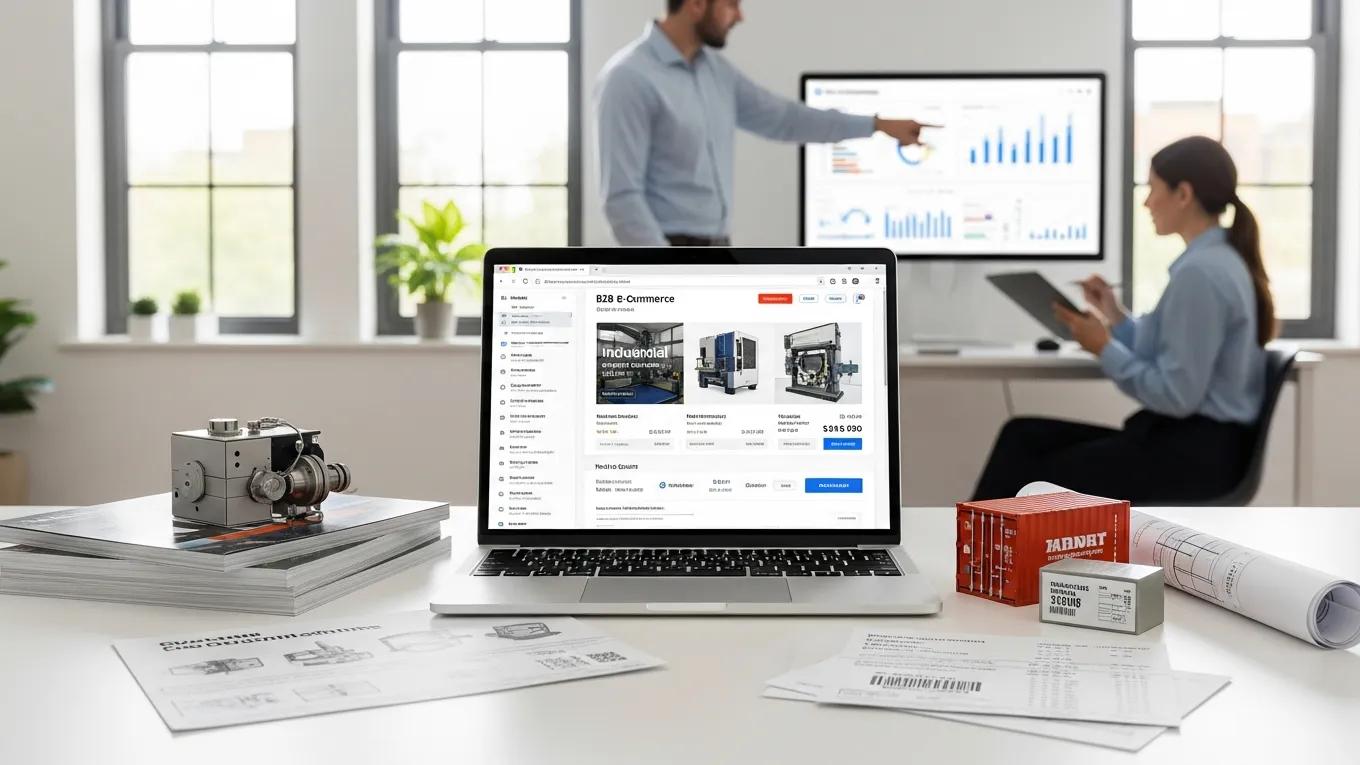
Selecting the Right B2B Ecommerce Software Solution
In the rapidly evolving landscape of B2B commerce, manufacturers and distributors face unique challenges that require tailored solutions. This comprehensive guide delves into the essential features, pricing models, and integration capabilities of B2B ecommerce platforms, providing a roadmap for businesses looking to enhance their online sales strategies. Readers will learn how to select the optimal software solution that not only meets their operational needs but also drives growth and efficiency. As the demand for digital transformation increases, understanding the nuances of B2B ecommerce becomes crucial for staying competitive. This article will cover key features, pricing models, integration capabilities, best practices for implementation, and the benefits of adopting a wholesale ecommerce system.
Key Features
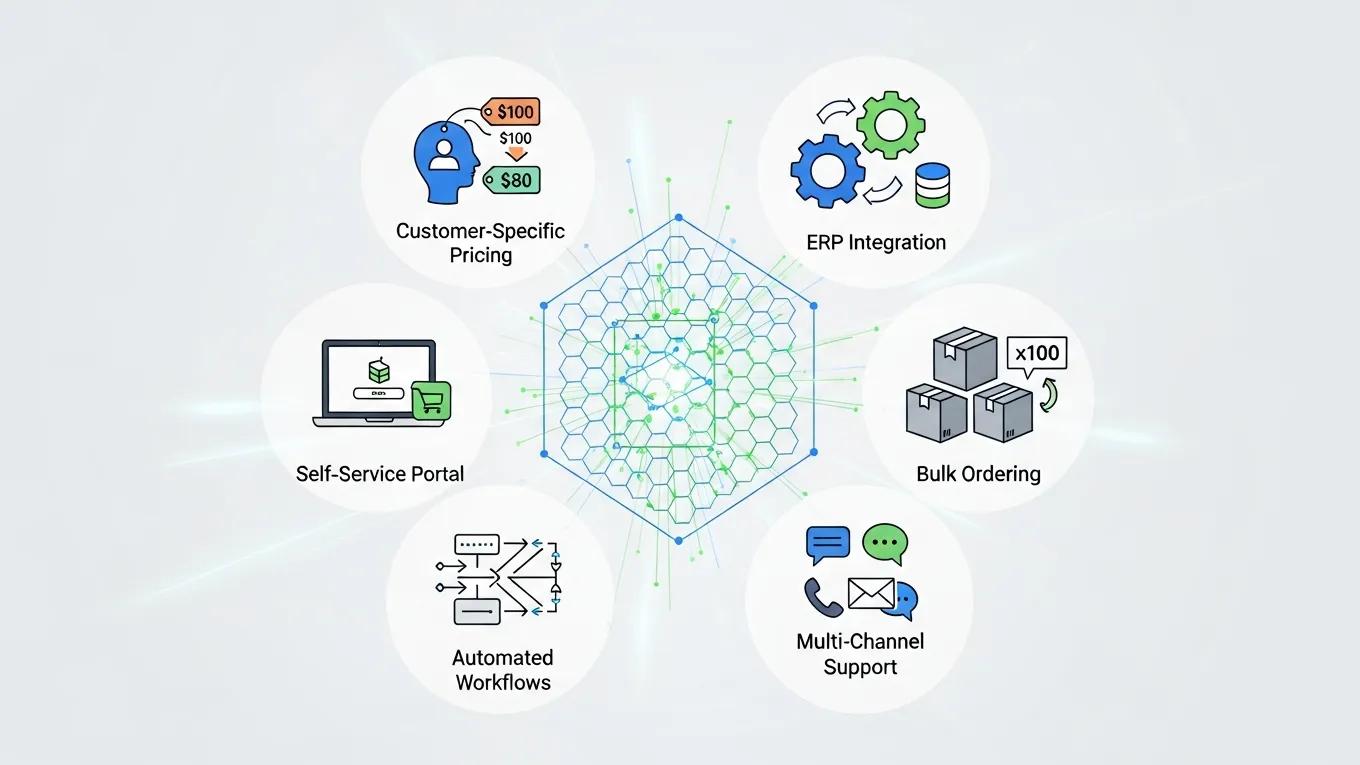
B2B ecommerce platforms are designed with specific functionalities that cater to the needs of manufacturers and distributors. These platforms typically include multi-store capabilities, account-based pricing, and robust integration options. Understanding these features is essential for businesses aiming to streamline their operations and enhance customer experiences.
- Multi-store Capabilities: This feature allows businesses to manage multiple storefronts from a single platform, catering to different customer segments or regions efficiently.
- Account-Based Pricing: Tailored pricing structures enable businesses to offer customized pricing to different customers based on their purchasing history or contract agreements.
- Integration Capabilities: Seamless integration with existing ERP and supply chain systems is crucial for maintaining operational efficiency and data accuracy.
Pricing Models
When selecting a B2B ecommerce platform, understanding the various pricing models is essential. Different platforms offer distinct pricing structures that can significantly impact a business’s bottom line.
- Subscription-Based Pricing: This model charges a recurring fee for access to the platform, often providing predictable costs for budgeting.
- Transaction Fees: Some platforms charge fees based on the volume of transactions processed, which can be beneficial for businesses with fluctuating sales.
- Custom Pricing: Tailored pricing options are available for larger enterprises or those with specific needs, allowing for flexibility in budgeting.
Integration Capabilities
Integration is a critical aspect of any B2B ecommerce platform. The ability to connect with existing systems can enhance operational efficiency and data management.
- ERP Integration: Many platforms offer built-in capabilities to integrate with ERP systems, ensuring that inventory and order management are synchronized.
- API Availability: A robust API allows for custom integrations, enabling businesses to connect their ecommerce platform with other software solutions.
- Dynamic Data Management: Effective data management capabilities ensure that product information is accurate and up-to-date across all channels.
Best Practices for Implementation
Implementing a B2B ecommerce platform requires careful planning and execution. Following best practices can help ensure a smooth transition and successful adoption.
Further insights into establishing effective B2B ecommerce operations highlight the importance of user-centric design and robust functionality.
B2B E-commerce Best Practices & Usability
The B2B eCommerce best practices presented here were identified through online research. Most of the best practices are either winners of various competitions or clients of the multi-award-winning digital agency “Kommerz – The Frontend Company GmbH” from Essen, which specializes in B2B shops. All of the shop examples presented are characterized by above-average usability criteria. Best Practices in B2B eCommerce, 2022
- Conduct a Detailed Discovery Process: Understanding the specific needs of the business and its customers is crucial for selecting the right platform.
- SWOT Analysis: Performing a SWOT analysis can help identify strengths, weaknesses, opportunities, and threats related to the ecommerce initiative.
- Pilot Testing: Before a full rollout, conducting pilot tests can help identify potential issues and allow for adjustments based on user feedback.
What Defines a B2B Ecommerce Platform for Manufacturers and Distributors?
A B2B ecommerce platform is characterized by its ability to support complex transactions and relationships between businesses. Key features include a dynamic database structure, account-based pricing, and multi-store capabilities. These elements work together to create a seamless shopping experience for business customers.
Understanding the diverse business models within B2B ecommerce is crucial for manufacturers and suppliers to tailor their online strategies effectively.
B2B E-commerce Business Models for Manufacturers & Suppliers
The possibilities of B2B eCommerce differ significantly depending on the type of business and the business type involved. Already in the product business, the marketing characteristics of industrial and consumer goods differ significantly. For example, manufacturers of consumer goods often also sell to end customers, so that dual online shops – recently also referred to as B2B2C business – make sense here. Here, new purchases and repurchases are relatively balanced, whereas in the supplier business, for example, identical repurchases not infrequently dominate the business, so that new customer acquisition is not as frequent here, but still has considerably more weight than, for example, in the industrial goods business or in systems. Finally, in the project or plant business, identical repurchases hardly ever take place, whereby in case of doubt every new business is accompanied by customer acquisition. Business models in B2B eCommerce, 2022
Key Features of Manufacturing Ecommerce Solutions
Manufacturing ecommerce solutions must address specific needs that differ from traditional retail platforms. Essential features include:
- Product Attribution and Customization: The ability to customize products based on customer specifications is vital for manufacturers.
- Integration with Existing Systems: Ensuring compatibility with current systems is crucial for maintaining operational efficiency.
- Advanced Site Search Capabilities: Enhanced search functionalities help customers find products quickly, improving the overall shopping experience.
Essential Capabilities of Distributor Online Sales Platforms
Distributor platforms require unique capabilities to manage their specific sales processes effectively. Key features include:
- Dynamic Pricing and Catalog Management: The ability to adjust pricing and manage product catalogs in real-time is essential for distributors.
- Multi-store Functionality: This allows distributors to cater to various customer segments or regions from a single platform.
- Approval Workflows: Implementing approval workflows can streamline the order process and ensure compliance with company policies.
How Do B2B Ecommerce Platforms Integrate with ERP and Supply Chain Systems?
B2B ecommerce platforms must integrate seamlessly with ERP and supply chain systems to ensure data consistency and operational efficiency. Key integration features include:
The integration of B2B e-commerce with ERP systems is increasingly recognized as an inevitable trend for manufacturing enterprises seeking to optimize resource management and adapt to modern business demands.
B2B E-commerce & ERP Integration for Manufacturers
The advent of the information age and the emergence of enterprise resource planning, all have brought the greatest advantage for enterprise integration of resources; a B2B e-commerce business model has formed and become a main trading method of the business development; in the age of electronic commerce, one-to-one market-based approaches, personalized orders and demand, as well as online customer service and other new business operations and service model, are not what traditional ERP system had expected; especially the emergence of flexible production, small batch production, etc., enable a wider range and more content of inter-corporate transactions; hence, the traditional ERP systems have to change from the corresponding structure and business functions, and many other aspects. E-commerce precisely provides an excellent support platform in response to this change. In addition, with funding from traditional enterprises, especially from large enterprises invested into the field of B2B, integration and applications of B2B e-commerce and ERP of manufacturing enterprises will become an inevitable trend Integration of B2B E-commerce and ERP in Manufacturing Enterprise and its Application, 2015
- API-First Architecture: This approach allows for flexible and scalable integrations with various systems.
- Centralized Product Information Management: A centralized system ensures that product data is consistent across all platforms.
- Automated Workflows: Automation of workflows can reduce manual errors and improve order processing times.
What Are the Benefits of Implementing a Wholesale Ecommerce System?
Implementing a wholesale ecommerce system offers numerous advantages for manufacturers and distributors. Key benefits include:
- Cost Savings: Streamlining operations can lead to significant cost reductions in order processing and inventory management.
- Improved Efficiency: Automation and integration capabilities enhance overall operational efficiency.
- Enhanced Customer Experience: A well-designed ecommerce platform can provide a better shopping experience, leading to increased customer satisfaction and loyalty.
Increasing Sales and Efficiency for Manufacturers
Manufacturers can leverage B2B ecommerce platforms to increase sales and operational efficiency. Strategies include:
- Customer Segmentation: Understanding customer needs allows for targeted marketing and personalized experiences.
- Dynamic Pricing: Implementing dynamic pricing strategies can help maximize revenue based on market conditions.
- Personalized Shopping Experiences: Tailoring the shopping experience to individual customer preferences can enhance engagement and conversion rates.
Enhancing Customer Experience for Distributors
Distributors can improve customer experience through various strategies, including:
- Personalization: Offering personalized recommendations based on customer behavior can enhance the shopping experience.
- Omnichannel Experience: Providing a seamless experience across multiple channels ensures that customers can interact with the brand in their preferred way.
- Efficient Order Management: Streamlined order management processes can reduce lead times and improve customer satisfaction.
How Can Customization and Scalability Improve Your B2B Ecommerce Platform?
Customization and scalability are critical for ensuring that a B2B ecommerce platform can grow with a business. Key considerations include:
- Tailored User Experience: Customizing the user interface and experience can lead to higher engagement and satisfaction.
- Rapid Market Adaptation: Scalable solutions allow businesses to quickly adapt to changing market conditions and customer needs.
- Multi-store Management: The ability to manage multiple stores from a single platform can simplify operations and reduce overhead.
Tailoring Solutions to Specific Manufacturing and Distribution Needs
Customizing ecommerce solutions to meet specific manufacturing and distribution needs is essential for success. Key strategies include:
- Dynamic Data Models: Implementing flexible data models can accommodate various product types and customer requirements.
- Account-Specific Customization: Tailoring features and pricing for specific accounts can enhance customer relationships.
- Scalability Considerations: Ensuring that the platform can scale with the business is crucial for long-term success.
Scaling Ecommerce Systems to Support Business Growth
As businesses grow, their ecommerce systems must scale accordingly. Key strategies for scaling include:
- Adopt a Headless Commerce Approach: This allows for greater flexibility in managing the front-end and back-end of the ecommerce platform.
- Utilize Composable Commerce: Composable commerce enables businesses to select best-of-breed solutions for different aspects of their ecommerce operations.
- Implement Robust Product Information Management: Effective product information management ensures that data remains consistent and accurate as the business scales.
What Pricing Models and ROI Metrics Should You Consider for B2B Ecommerce Software?
When evaluating B2B ecommerce software, it is essential to consider various pricing models and ROI metrics. Key factors include:
- Comparing Subscription and Licensing: Understanding the differences between subscription-based and licensing models can help businesses choose the right option.
- Measuring Return on Investment: Establishing clear metrics for measuring ROI can help justify the investment in ecommerce solutions.
- Data-Driven Insights: Utilizing data analytics can provide valuable insights into customer behavior and sales performance.
Which Case Studies Demonstrate Success with B2B Ecommerce Platforms?
Examining case studies can provide valuable insights into the effectiveness of B2B ecommerce platforms. Key examples include:
- Manufacturing Industry Success Stories: Many manufacturers have successfully implemented ecommerce solutions to streamline operations and increase sales.
- Distributor Online Sales Platform Implementations: Distributors have leveraged ecommerce platforms to enhance customer engagement and improve order management.
- Outcomes and Metrics: Analyzing the outcomes of these implementations can provide valuable lessons for businesses considering similar solutions.